Projects
Gold-Copper
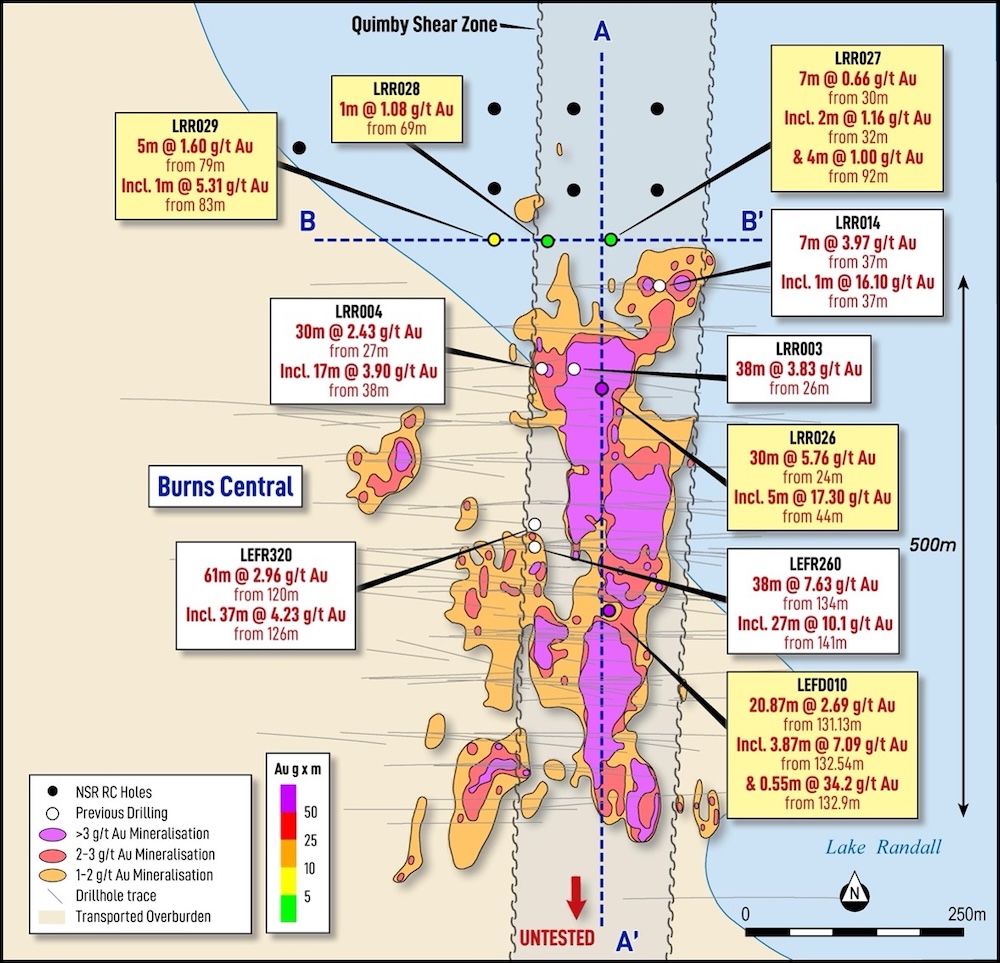
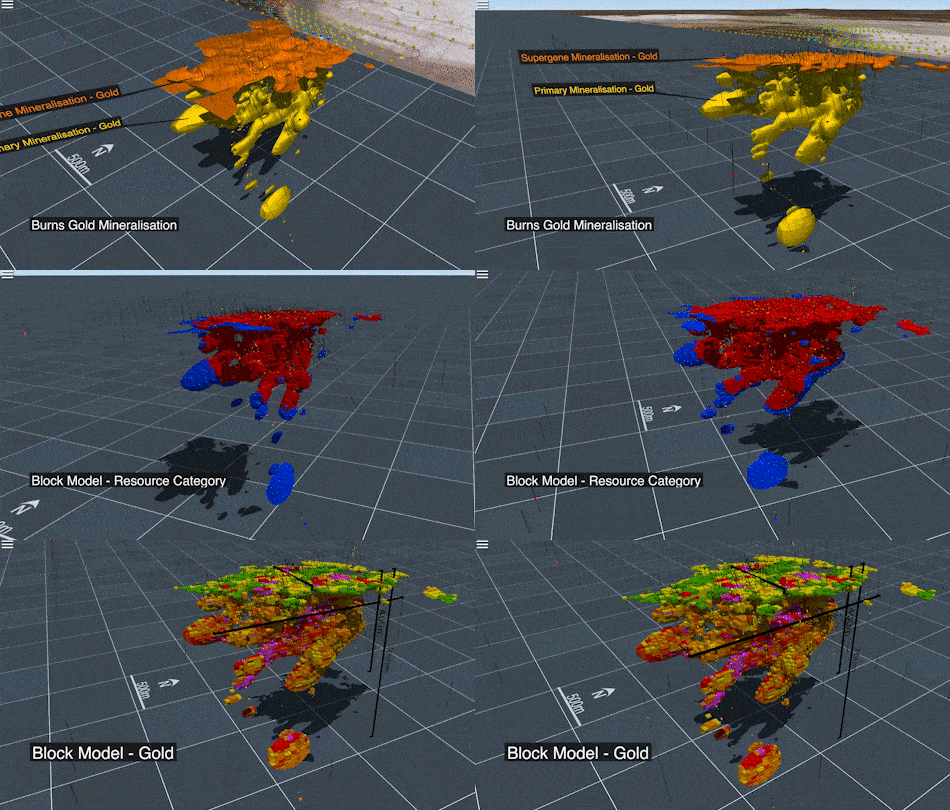
Burns Central Location map depicting resource cut to 0.5g/t Au
Lefroy Exploration – Burns Project
Project Overview
The Burns Deposit is located within the broader Lefroy Gold Project, approximately 70 km southeast of Kalgoorlie in Western Australia. The project is strategically positioned near several major gold operations, including the St Ives Gold Camp operated by Gold Fields Limited and the Daisy Milano and Mt Monger operations operated by Vault Minerals.
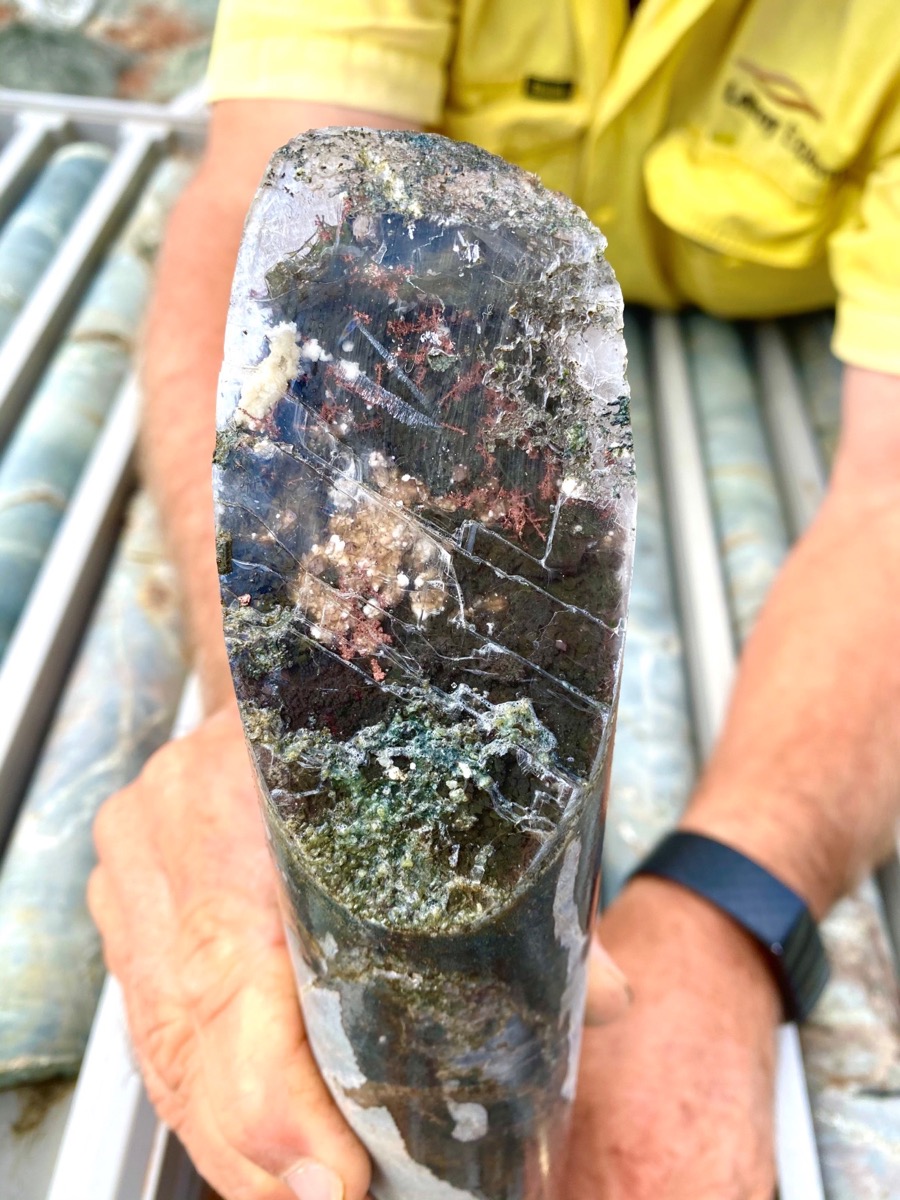
Burns is an alkalic intrusion-related gold-copper system hosted within Archaean diorite porphyries and basalt and is associated with a distinctive aeromagnetic signature. The Company considers this style of mineralisation to be unique within the Eastern Goldfields Province, with the potential to develop into a district-scale gold-copper camp comparable to major porphyry systems such as the Cadia district in New South Wales and porphyry deposits in British Columbia.
Exploration History
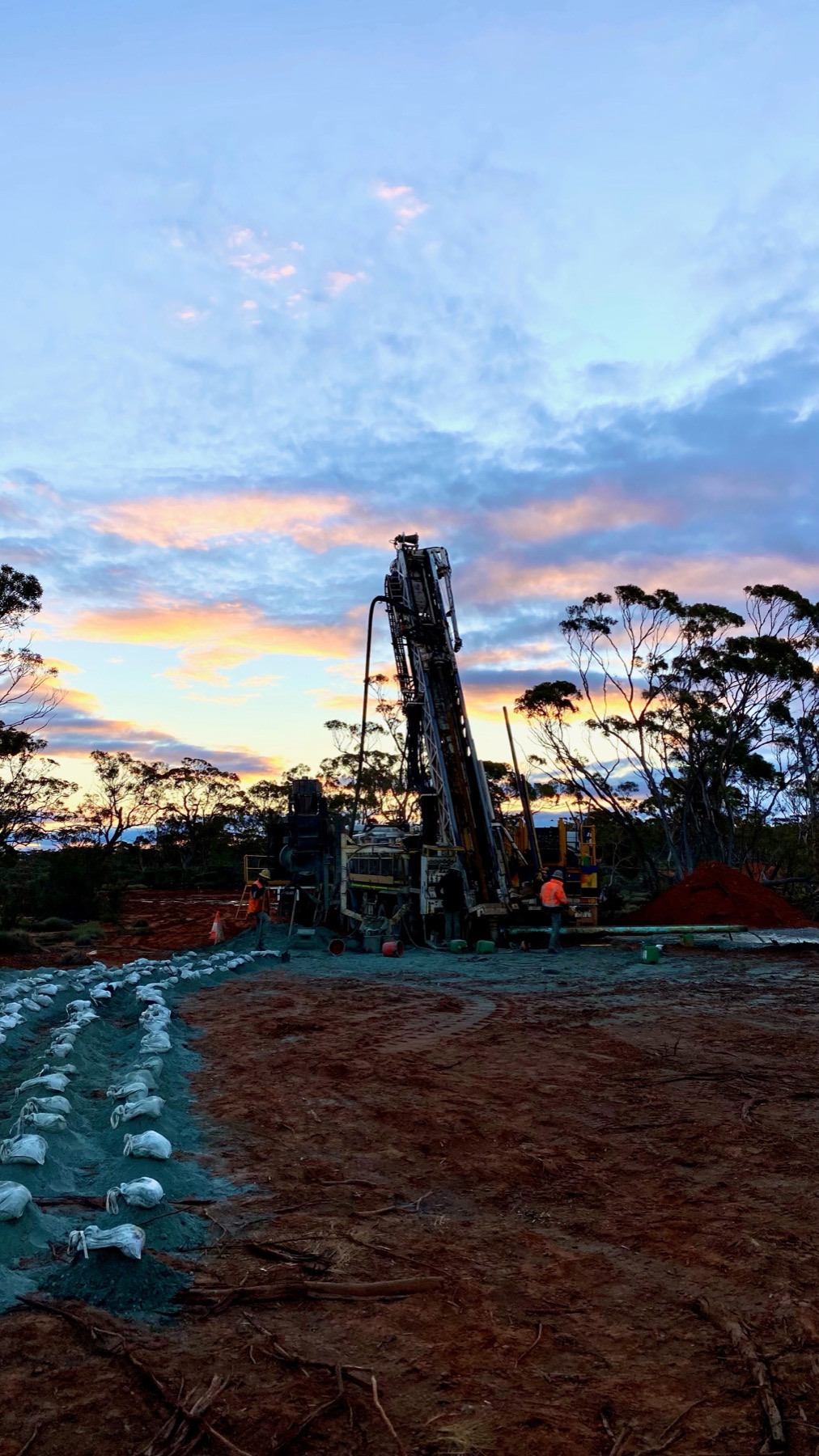
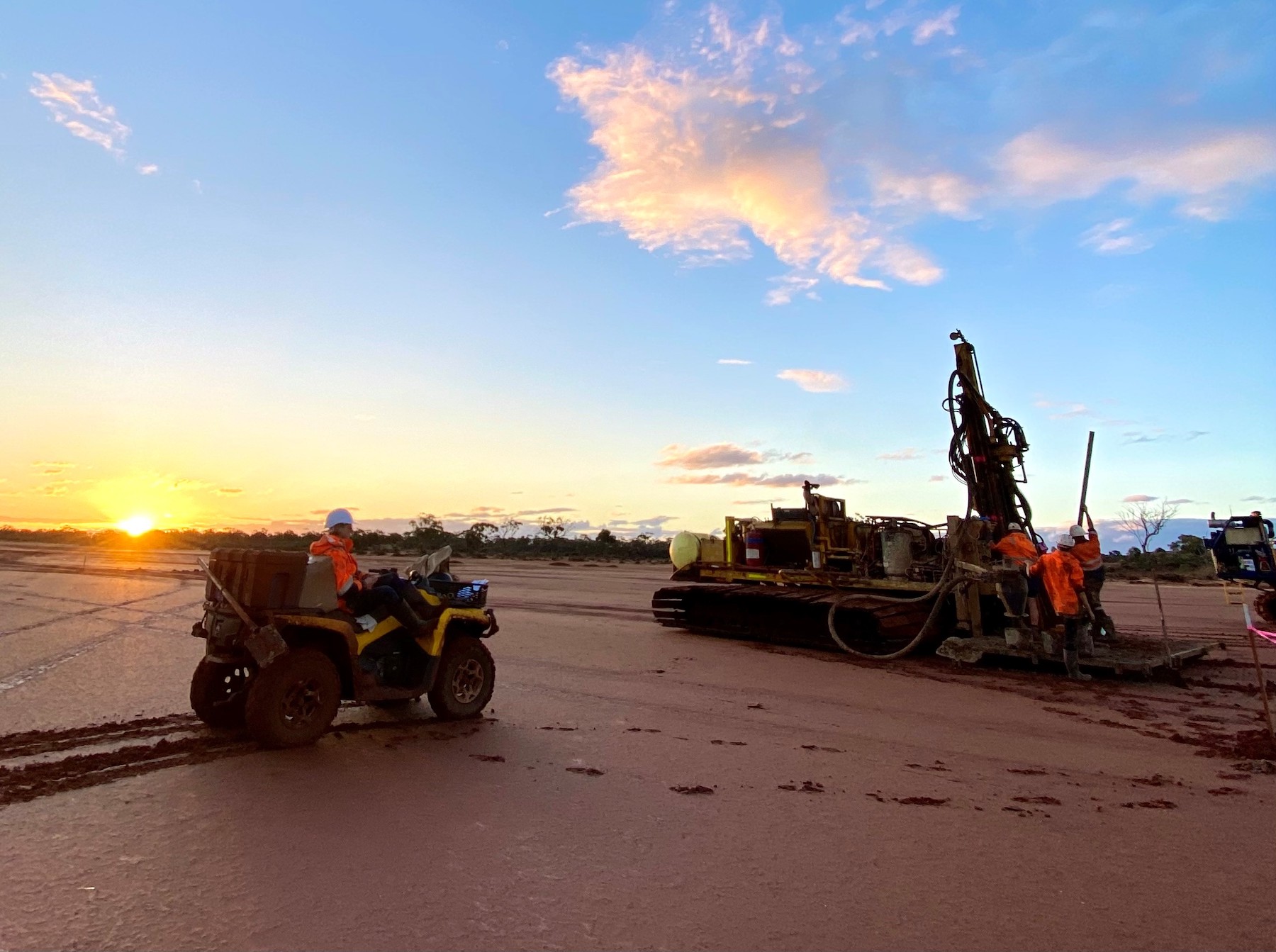
The Burns discovery was made following a 22-hole Reverse Circulation (RC) drilling program completed in early 2021, with the initial discovery of gold and copper announced in February 2021.
Since discovery, exploration has focused on expanding the mineralised system and progressing resource definition. This work culminated in the delivery of the maiden Mineral Resource Estimate (MRE) for Burns Central in May 2023.
The Burns Central MRE comprises 43 million tonnes grading 0.36 g/t gold, 0.14% copper and 0.35 g/t silver, with the resource classified as 75% Indicated and 25% Inferred in accordance with the JORC Code (2012). The resource contains approximately:
- 500,000 ounces of gold
- 58,300 tonnes of copper
- 490,000 ounces of silver
with additional cobalt and molybdenum credits.
Burns Central represents the most advanced of seven porphyry-related prospects that define the 4.5 km-long Burns Corridor. Early-stage exploration across the corridor has intersected encouraging gold and copper mineralisation at the Smithers, Flanders and Lovejoy prospects, demonstrating significant potential for a large-scale mineralised system.
High-Grade Gold Zone
In October 2024, Lefroy announced the identification of a significant structurally controlled high-grade gold zone within the existing Burns Central MRE. This higher-grade component comprises 4.22 Mt at 1.18 g/t Au for 159,285 contained ounces of gold, all located within approximately 200 metres of surface.
The recognition of this higher-grade domain has significantly enhanced the development potential of the Burns Project and provides an important focus for ongoing resource growth and metallurgical evaluation.
Metallurgical Test Work
During 2024, the Company completed preliminary metallurgical characterisation on six composite RC drill samples representing the principal geological domains within the Burns resource.
The program included:
- Comprehensive head assays
- Sequential copper analysis
- Mineralogical studies (XRD and QEMSCAN)
- Gravity separation testing
- Intensive cyanide leaching
The test work demonstrated strong gravity gold recoveries across all samples, averaging 41% gravity recoverable gold. Subsequent intensive cyanidation of the gravity concentrates achieved between 95% and 99.7% gold dissolution, indicating excellent recoverability of the gravity concentrate.
As cyanide leaching was not undertaken on the gravity tails, the program was unable to determine the overall performance of whole-ore cyanide leaching.
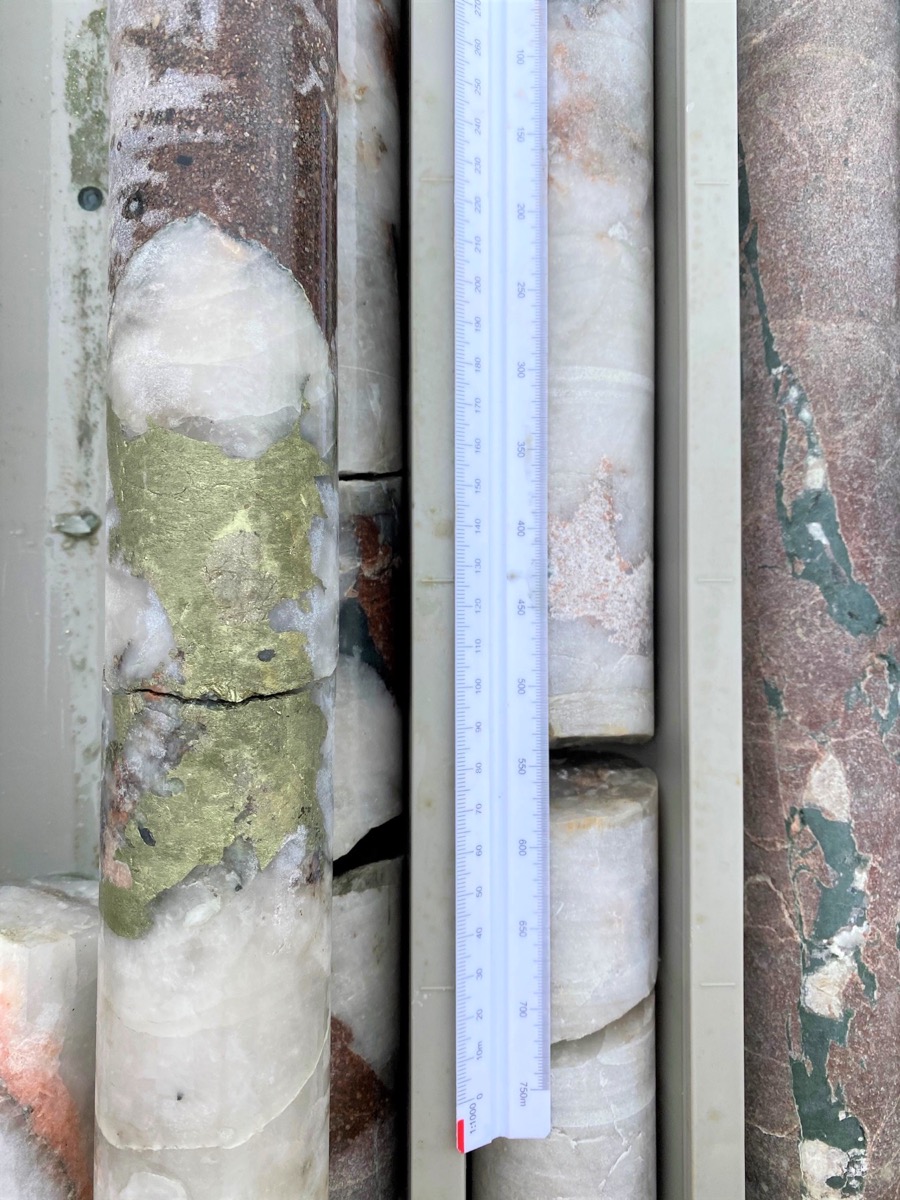
To support more comprehensive metallurgical studies, the Company completed diamond drill hole LEFD010 in December 2025 to obtain representative material from the Burns high-grade zone. Subsequent metallurgical test work used material from LEFD010 and RC hole LRR026.
Several significant high-grade gold intersections were returned, with notable intersections including:
- 20.87m @ 2.69 g/t Au from 131.13m, incl 3.87m @ 7.09 g/t Au from 132.54m (LEFD010)
- 6.4m @ 2.59 g/t Au from 191m, incl 0.93m @ 10.6 g/t Au from 196.07m (LEFD010)
- 0.38m @ 15.3 g/t Au from 245m (LEFD010)
- 30m @ 5.76 g/t Au from 24m, incl 5m @ 17.3 g/t Au from 44m (LRR026)
- 7m @ 1.15 g/t Au from 71m, incl 2m @ 2.9 g/t Au from 76m (LRR026)
Test work confirmed 97% gold recovery by conventional cyanide leaching from oxide and fresh rock domains at typical processing conditions, in addition to high gravity gold recoveries ranging from 38% to 57%.
Burns Project 3D Animation - View Here
Read about our projects:
View our project gallery: